Verified Sourcing Complexity
Identifying trustworthy counterparties, validating refinery standards, and maintaining documented provenance across jurisdictions is resource-intensive.

Build your own institutional-grade commodity trade supply chain with Swiss excellence
The commodity trade market is the global framework through which physical resources such as gold, silver, energy products, agricultural goods, and industrial metals are sourced, financed, transported, and allocated between producers and end users. It integrates the physical movement of goods with pricing mechanisms, contractual structures, and risk management tools to ensure that supply and demand are matched efficiently across jurisdictions.
Rather than relying on informal or ad-hoc spot transactions, the modern commodity trade market operates through structured counterparties, formal supply agreements, and compliance-driven processes that provide legal certainty, quality assurance, and transparent settlement. Pricing is typically anchored to internationally recognized benchmarks, while transactions are supported by trade finance facilities, inspection protocols, logistics coordination, and insured custody arrangements.
In cross-border procurement, this market enables participants to secure verified, quality-controlled supply from vetted sources while navigating regulatory requirements, customs procedures, and transport logistics with reduced execution risk. Its strategic function lies in combining dependable market access, institutional-grade documentation, tailored commercial structuring, and secure storage pathways. By integrating physical delivery with financial infrastructure, the commodity trade market ensures that positions remain liquid, bankable, and tradable over time, supporting both industrial continuity and capital efficiency.
Identifying trustworthy counterparties, validating refinery standards, and maintaining documented provenance across jurisdictions is resource-intensive.
KYC/AML checks, sanctions screening, legal documentation, and settlement requirements create delays and operational risk when managed without specialist support.
Cross-border transport, insurance, chain-of-custody controls, and secure vaulting demand institutional infrastructure that most buyers do not have internally.
With the right Swiss partner, complexity gives way to clarity: we design and operationalize the full supply chain, provide high-security custody in the Swiss mountains, and structure your commodity assets to be readily tradable and deployable as collateral across trade-finance credit lines, inventory-backed lending, repo-style funding, structured-note collateralization, institutional balance-sheet credit enhancement, and digital-currency frameworks.
To structure your request precisely and move to execution quickly, please prepare the following details.
Legal entity details, ultimate beneficial ownership, authorized signatories, and current KYC/AML status.
Commodity category, technical specifications, acceptable origins, and preferred procurement channel.
Initial allocation, recurring demand forecast, minimum lot parameters, and required delivery schedule.
Target pricing framework, discount expectations, settlement mechanics, and risk tolerance thresholds.
Preferred custody model (Swiss bank vault or mountain storage), insurance scope, and legal jurisdiction constraints.
Intended use of assets, including tradability goals, collateralization strategy, and treasury or financing outcomes.
Please complete the questionnaire below so we can structure your mandate with precision.
Every mandate follows a disciplined framework that protects counterparties,
asset quality, and execution integrity
These standards ensure each transaction remains verifiable, compliant, and finance-ready across its full lifecycle
The Durisch Family Legacy
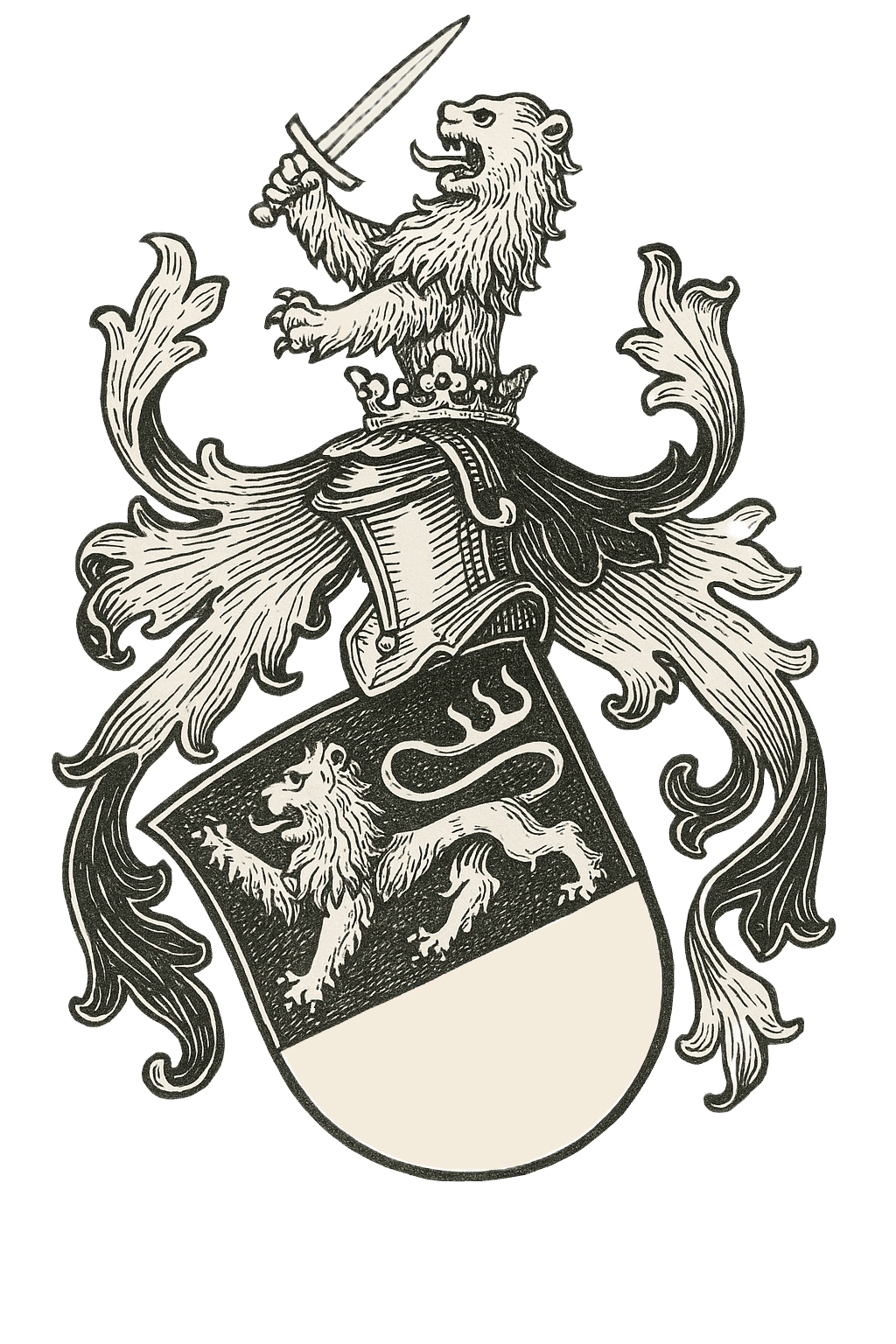
Family Shield - Source: Graubunden State Archive
The Durisch family is an ancient Swiss family with roots extending back centuries, descended from the knightly Campell house, a line of medieval free nobles and Lords in the Domleschg valley, active from the 13th century onward. The family shield, preserved in the Graubunden State Archive, represents generations of tradition and excellence in Swiss society.
According to historical records, the family's noble lineage traces its origins to a distinguished family of knights from Domleschg, who are believed to have established Campell Castle around the year 1200 and maintained their dominion over it until the 14th century. The historical chronicles reveal that Egeno de Campelle emerged in the bishop's register during the latter part of the 13th century, marking a significant presence in ecclesiastical and secular affairs.
The family has been traceable in the Engadine since the 15th century. In 1499, a Gaudentz appears as a former Landammann in Bivio-Stalla. From the beginning of the 16th century, the family appeared in Susch (1510 Durisch) and Lavin. This line produced Luzius Conradin, known as Luza (1821-75), captain in the Sonderbund War, who owned a brewery in Susch from 1860 and was committed to promoting brown cattle breeding.
The Durisch family emerged as prominent figures during the Reformation, with the surname first documented in Susch in 1510. The 16th-century pastor-historian Ulrich Campell (b.1522) adopted the Romansh form Ulrich Durisch, establishing the surname that became synonymous with reformist leadership and civic service.
The family served as magistrates, clergy, and civic leaders across Graubunden. By 1552, a Durisch Dakauwiezel signed as Landammann of Ilanz and the Gruob district, and in 1559, Hans Durisch served as an Ammann of the Gruob. These positions attest to the family's civic roles in Surselva by the mid-1500s.
Ulrich Durisch's literary and pastoral work had lasting impact on the establishment of Reformed institutions across Graubunden. He authored Romansh catechetical and liturgical texts and contributed major Latin historical works, helping preserve regional identity and culture.
The surname Durisch finds its origins in the Romansh form of the name Ulrich. In Romansh tradition, names such as Durich often took on patronymic forms, which then became hereditary surnames in the region. The significance of the name extends beyond linguistics, reflecting continuity of noble, civic, and intellectual heritage.
Though the main line of the Campell family is believed to have become extinct by the end of the 14th century, its legacy persisted through cadet branches, particularly in the Engadine. This continuity is visible in the life and work of Ulrich Campell and descendants who upheld traditions of public service, education, forestry, and innovation.
AC Attractive Corporation AG, the management company of IFED, was founded in the year 2000 during a global technological shift. Within this context, Martin Durisch and co-founder Pablo von Arx established the company to bridge traditional financial frameworks with the emerging digital economy.
In 2022, Antonia Martina Durisch assumed the role of president and full ownership, leading a strategic transformation across advanced technologies and institutional finance. The Durisch lineage has shaped Swiss financial history over centuries, with continued influence in private banking and executive leadership.
IFED's comprehensive approach is organized through five pillars:
After 25 years of continuous growth and evolution, IFED has emerged as a global institution focused on technological advancement, research and development, and mass-impact generation. By combining traditional Swiss values with modern innovation, the organization continues to drive sustainable economic transformation.
Beyond business outcomes, the Durisch family remains committed to philanthropic initiatives focused on education, underserved communities, and ESG-aligned projects, while maintaining a longstanding tradition of civic responsibility and national service.